
How many porta potties do I need for a construction site?
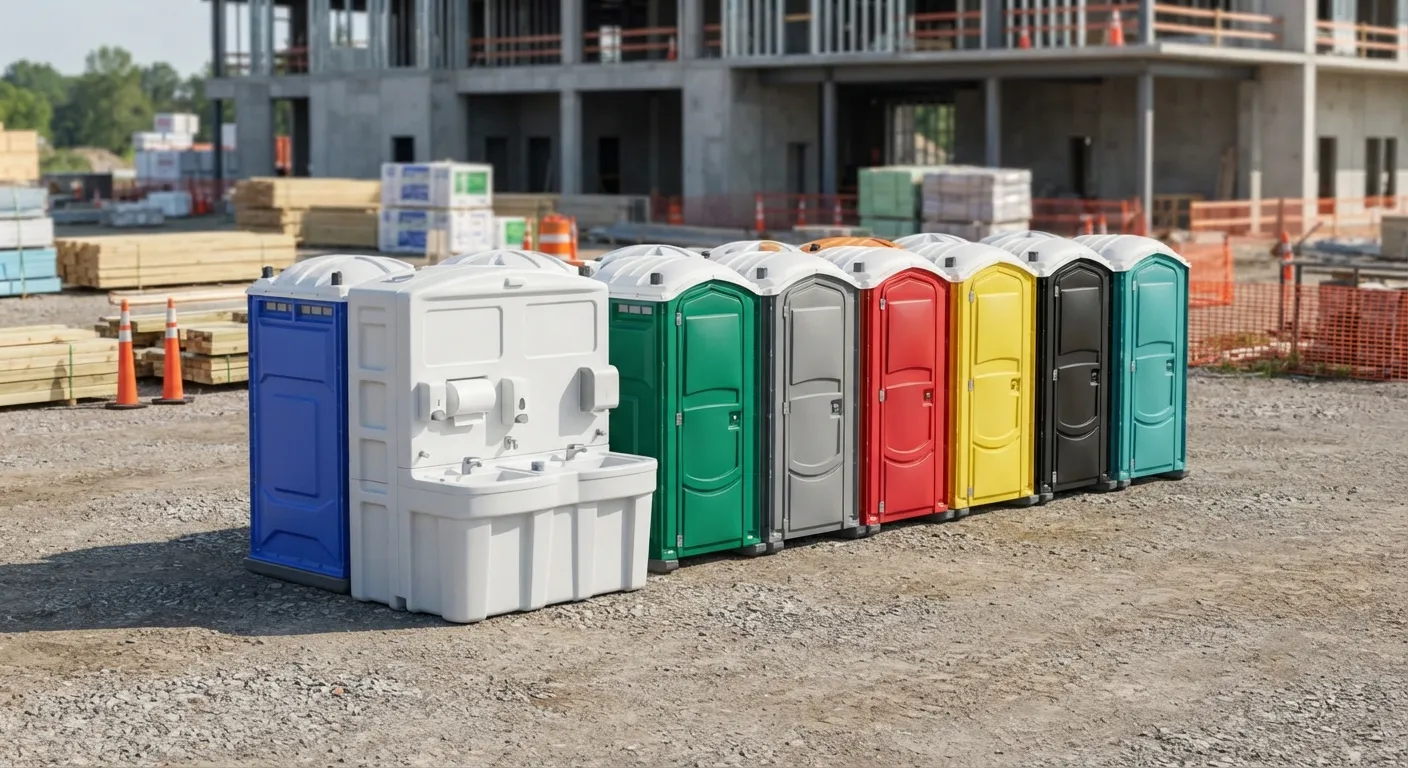
Start with OSHA 1926.51(c): 20 workers or fewer means 1 toilet facility, period. Once you pass 20 workers, the rule shifts to 1 toilet seat and 1 urinal per 40 workers, and at 200 or more workers it drops to 1 seat and 1 urinal per 50. A 15-person framing crew needs one standard porta potty rental. A 60-person site needs two seats plus urinals under the 40-worker bracket. Multi-trade jobs running 100+ workers should look at construction site services as a package rather than piecing it together unit by unit. Don't forget water: OSHA 1926.51(a)(1) requires an adequate supply of potable water at every jobsite, which is why crews often pair toilets with a handwashing station rental. If your crew works with paints, coatings, herbicides or insecticides, OSHA 1926.51(f)(1) kicks in and requires washing facilities beyond the water jug on the tailgate. Check the OSHA portable toilet requirements page for the full bracket table before you finalize a headcount, and use the how many porta potties do I need numbers here as your starting math, not your final answer.
What is the porta potty ratio for an event?
Plan for 1 unit per 50 guests over 4 hours, then add units for longer days or alcohol service. A 200-guest backyard party in Huntington Park for an afternoon needs 4 units minimum. Push that same party to 8 hours and you should add at least one more, since usage compounds after guests start drinking. Event restroom rental planning always starts here, then adjusts for site-specific factors like distance to parking or whether you're renting a deluxe flushable porta potty instead of a standard unit. Weddings deserve their own math because guests dress up and won't tolerate a line; see wedding restroom rental for ratios geared toward that crowd. Festivals and fairs run hotter ratios still, closer to 1 per 75 to 100 depending on beer sales, covered on the festival restroom rental and county fair restrooms pages. If your event runs multiple days, treat each day as its own service interval rather than assuming one setup carries the whole run.
| headcount | event length | units needed |
|---|---|---|
| 50 | 4 hours | 1-2 |
| 100 | 4 hours | 2 |
| 150 | 4 hours | 3 |
| 200 | 4 hours | 4 |
| 200 | 8 hours | 5 |
| 300 | 8 hours | 6-7 |
Does serving alcohol change the number of units?
Yes. Alcohol increases bathroom trips and slows down turnover, so add roughly 10 to 20 percent more units than the dry-event ratio. A 150-guest party pouring beer and wine for 6 hours should book 4 units instead of 3. Concerts and festivals with full bar service push even higher, which is why concert restroom rental planning always assumes the higher band of the ratio table. Multi-day festivals compound this further: a 3-day event needs a servicing schedule, not just a bigger initial order, since ANSI/PSAI Z4.3 sets the baseline service interval at once per week for up to 10 users over a 40 hour stretch, and a beer garden blows past that fast. If you're running a golf tournament with a beer cart, check golf tournament restrooms for placement near the turn, not just the clubhouse.
How many tons does a 20 yard dumpster hold, and how many feet is it?
A 20 yard dumpster runs about 22 feet long and holds roughly 5,400 cubic feet of debris capacity, translating to somewhere in the 2 to 3 ton range depending on material density, while people asking how many tons does a 30 yard dumpster hold are usually looking at 3 to 4 tons and how many tons does a 40 yard dumpster hold usually lands at 4 to 5 tons. That's the workhorse size for a single-family remodel or a roof tear-off. Full dimensions and yard-by-yard comparisons live on dumpster sizes and dimensions. If you're gutting a kitchen or doing a home renovation porta potty job alongside the debris haul, pair the dumpster with a standard toilet so the crew doesn't track through the house. Delivery needs roughly 60 feet of straight clearance behind the truck, so confirm your driveway or street access before scheduling. Check the 20 yard dumpster rental page for what fits inside that footprint.
How many cubic feet are in a 10 yard, and what about the 30 and 40 yard?
A 10 yard dumpster measures out to roughly 2,700 cubic feet, and if you're asking how many cubic feet in a 10 yard dumpster or how many feet is a 10 yard dumpster in length, it runs about 12 to 14 feet long, a compact option for a garage cleanout or a small bathroom remodel; see 10 yard dumpster rental for details. Step up to a 30 yard and you're looking at around 8,100 cubic feet, and how many tons can a 30 yard dumpster hold comes out to an estimated 3 to 4 tons depending on what's going in, detailed on the 30 yard dumpster rental page. The 40 yard tops out near 10,800 cubic feet, which answers how many cubic feet in a 40 yard dumpster, and it can carry 4 to 5 tons for heavier construction debris, covered on 40 yard dumpster rental. Whatever size you land on, check what cannot go in a dumpster and dumpster weight limits before loading, since overage fees hurt more than ordering one size up.
Are there ADA requirements for how many units I need?
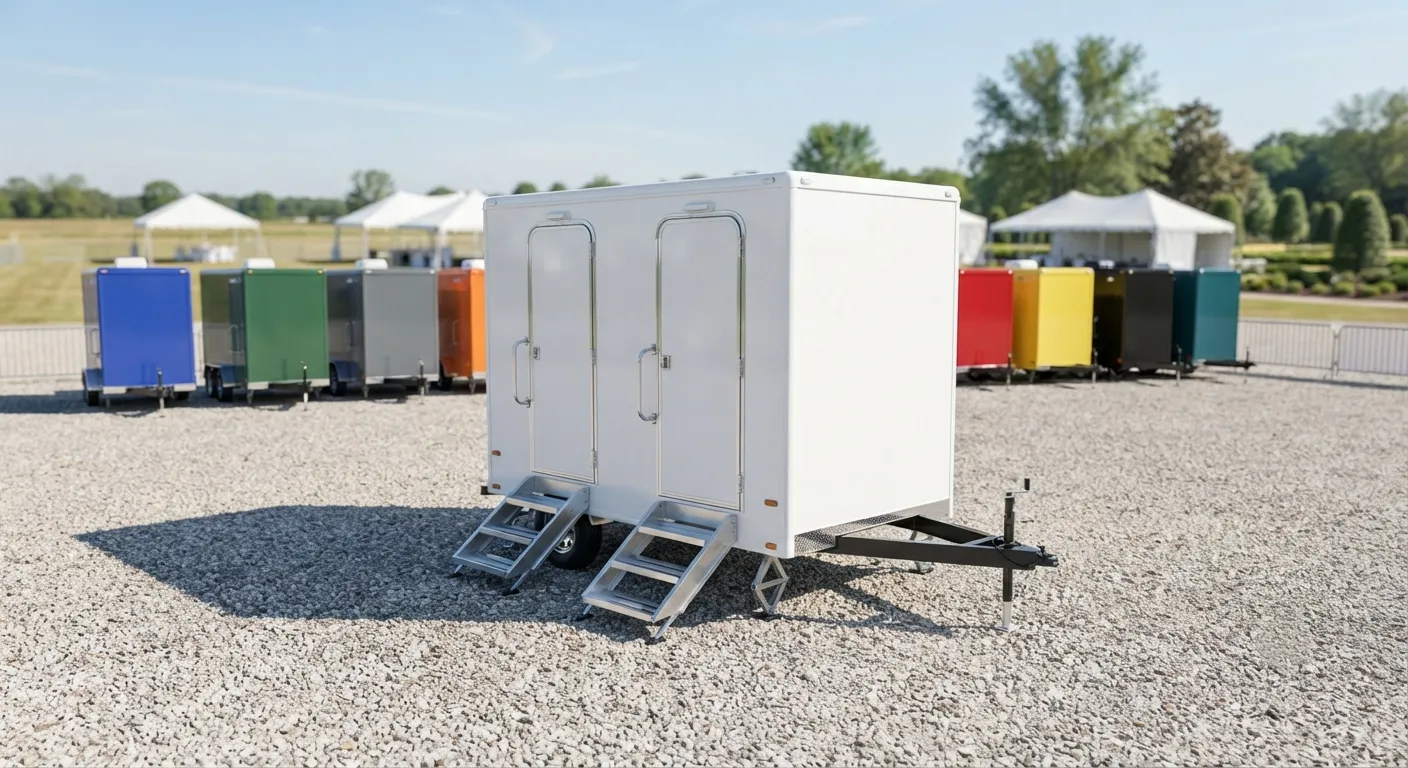
Yes. ADA Standards section 213.2 requires that where single-user portable toilet units are clustered, at least 5 percent must be accessible, and never fewer than one unit regardless of how small the cluster is. That means even a 3-unit event order in Huntington Park needs one ADA accessible porta potty on site. The accessible unit needs a 60 inch turning circle per ADA Standards 304.3.1, a 32 inch clear door opening per section 404.2.3, and a stable, slip-resistant surface underneath per section 302.1. Placement matters as much as count: the unit needs a 36 inch clear route per section 403.5.1, so don't tuck it behind a curb or a gravel patch. Full layout guidance is on ADA restroom requirements and porta potty placement guide.
How do I count units for a farm or agricultural crew?
Federal field sanitation rules under OSHA 1928.110 require one facility per 20 hand-labor employees, and it has to sit within a quarter mile walk of wherever people are working the field. That's a tighter placement rule than a typical construction site, since crews can't walk far during a shift. A 45-person harvest crew spread across two fields needs at least 3 units, split by location rather than clustered at one entrance. See farm and agricultural restrooms for how that plays out with multiple field zones. Handwashing has to travel with the toilets on ag sites too, not sit back at the barn, so pair each cluster with a portable sink rental or a compact hand sanitizer station rental if running water isn't practical at every stop.
Worked example: a 3-day festival in Huntington Park
Say you're running a 3-day festival expecting 400 people per day for 8 hours, with beer sales in the afternoon. Start with the 8-hour ratio of roughly 1 unit per 40 to 50 guests, which lands you at 8 to 10 standard units. Add the alcohol adjustment of 10 to 20 percent and you're at 9 to 12 units. Add one ADA unit per ADA Standards 213.2, since any cluster this size requires at least one accessible unit. Multi-day means servicing between days rather than a single setup and pickup. A standard unit rented for a week runs on the weekly pricing band rather than three separate daily bookings, which is worth checking on porta potty rental cost before you commit to a day-rate order. If the event needs higher-end fixtures for VIP areas, look at luxury restroom trailer options instead of stacking more standard units. Crews driving in from Bell, 2.5 miles east, or Commerce, 5.7 miles east, should confirm delivery timing against the festival load-in schedule so units are staged before gates open.
How many porta potties do I need for 50 people?
For a half-day event, 1 to 2 standard units cover 50 guests comfortably. Push the event past 4 hours or add alcohol service and you should move to 2 units minimum. A single porta john rental works for a short backyard gathering, but anything with a bar or extended hours needs the second unit to avoid a line.
How many toilets does OSHA require for 30 employees?
Under OSHA 1926.51(c), 30 workers falls into the 20-to-40 bracket, which requires 1 toilet seat and 1 urinal. That's a step up from the flat single-unit rule that applies below 20 workers. Confirm your crew size against the OSHA portable toilet requirements bracket table before ordering.
Do I need more units if my event runs multiple days?
Yes, treat multi-day events as a servicing question, not just an initial headcount question. ANSI/PSAI Z4.3 sets a baseline service interval of once per week for up to 10 users over 40 hours, and a 3-day event with heavy use will need pumping between days. Ask about weekly rates rather than booking three single-day contracts.
How many cubic feet does a 20 yard dumpster hold?
A 20 yard dumpster holds roughly 5,400 cubic feet and runs about 22 feet long. It's the common choice for a mid-size remodel or a roof job. Full comparisons against the 10, 30 and 40 yard sizes are on dumpster sizes and dimensions.
Does an accessible unit count toward my total headcount ratio?
Yes, the ADA unit counts as one of your total units under the ratio math, it just also has to meet accessibility specs. ADA Standards 213.2 requires at least one accessible unit per cluster regardless of size. Don't add it as an extra on top of your headcount count, fold it into your total.
What if my crew works with paint or chemicals on site?
OSHA 1926.51(f)(1) requires washing facilities specifically where employees apply paints, coatings, herbicides or insecticides, beyond the general toilet count. That's a separate requirement from 1926.51(c) toilet ratios. A handwashing station rental placed near the mixing or spray area satisfies this without slowing down the crew.
Next step
Get a delivery date
Tell us the address, the dates and the headcount. We size the order and confirm the route.