
Where should a porta potty go on my property?
Start with ground. It needs to be level and firm, since ADA Standards section 302.1 calls for stable, firm, slip-resistant surfaces on any accessible route, and that same logic applies to standard units too. A soft lawn after rain will let a unit lean. Next, think about the service truck. Our driver needs a straight approach to pump and swap tanks, similar to the roughly 60 feet of clearance a roll-off dumpster delivery needs behind the truck. Keep the unit away from doors, windows, and anywhere food gets prepped or served. If you're placing units for a backyard build alongside a home renovation porta potty or a full construction site services setup, give the crew a straight walking path from the work zone. Huntington Park lots vary block to block, so we walk the site with you before the standard porta potty rental or deluxe flushable porta potty gets dropped. A porta potty rental cost quote usually includes a placement check as part of delivery.
What are the porta potty placement rules for job sites?
Job site rules follow OSHA's headcount math. OSHA 1926.51(c)(1) sets ratios: one toilet for 20 workers or fewer, then one toilet seat and one urinal per 40 workers as crews grow past that, dropping to one seat and urinal per 50 workers at 200 or more. Placement has to keep pace with those counts, not just meet them on day one. If your crew handles paints, coatings, herbicides or insecticides, OSHA 1926.51(f)(1) requires washing facilities near the work area, and a handwashing station rental or portable sink rental covers that. Some crews run Ozark River units on site; when a spray head or drain fitting wears out, ozark river portable sink replacement parts are a maintenance item worth budgeting for separately from your rental. General industry sites, as opposed to construction, fall under OSHA 1910.141(c)(1)(i) instead. For fencing off the placement zone, temporary fence rental or a chain link temporary fence keeps foot traffic and equipment away from the unit.

Do I need a permit to place a porta potty or dumpster in Huntington Park?
Placement in the public right of way, meaning the sidewalk or street in front of a property, needs confirming with the City of Huntington Park before drop-off. We have not verified a specific permit fee or ordinance number for portable toilets, so don't take a number from us or anyone else without calling the city first. The same holds for dumpster permit requirements: a dumpster placement permit process and any dumpster placement permit cost figure differ by jurisdiction and change, so check with Huntington Park's permitting office directly rather than relying on a website estimate. If you're placing a unit on private property, set back from the curb, a permit usually isn't triggered, but confirm that too. Our porta potty permit requirements page walks through what to ask the city clerk. Neighboring cities like Bell, 2.5 miles east, and Commerce, 5.7 miles east, each run their own permit desks, so a rule that applies in one doesn't carry over.
Where should ADA-accessible units and trailers be placed?
Accessible placement has its own math. ADA Standards section 213.2 requires that when single-user units are clustered, at least 5 percent, and never fewer than one, be accessible. That accessible unit needs a 36 inch clear path per ADA Standards section 403.5.1, a 32 inch door opening under section 404.2.3, and a 60 inch turning circle inside per section 304.3.1. Skip the gravel patch and pick the flattest ground near the entrance. For events needing more capacity, an 8 stall restroom trailer or 4 stall restroom trailer needs a level pad and a power hookup nearby; check ramp slope against ADA Standards section 405.2, which caps running slope at 1:12. Storage units on the same job site have placement needs too. A 20ft storage container or 40ft storage container needs a hard, level pad, and if you're running a mobile office trailer rental alongside it, mobile office trailer replacement doors are a common repair request once a site has been active for a season or two. None of that is placement-code related, just wear and tear worth planning for on longer jobs in Huntington Park.
How far from the property line should a unit sit?
There's no single fixed number we can quote, since it depends on the site and any city right-of-way rule. As a working habit, keep units off the sidewalk, clear of fire hydrants, and away from storm drains. Confirm any setback question with Huntington Park's permitting desk before delivery day.
Can I move a porta potty myself after it's placed?
Small shifts, a foot or two on level ground, are fine. Don't tip or drag a unit with a full or partial tank; a standard tank holds 60 to 70 gallons and gets heavy fast. Call us to reposition it instead. It's a five-minute fix on a service visit.
How does septic pumping placement work for a holding tank?
Placement follows the same access rule as our trucks: a clear path in, no tight turns. A residential tank is typically pumped every 3 to 5 years depending on size and household use. If you're outside Huntington Park, ask about placerville septic pumping service scheduling, since drive time affects appointment windows on distant jobs.
What happens if a unit blocks a fire lane or hydrant?
The city can order it moved and may cite the property owner. Keep at least a full truck-width clear of any hydrant or marked fire lane. We flag this during the site walk before delivery, and it's cheaper to fix on paper than after a truck can't get through.
Do handwashing stations need their own placement plan?
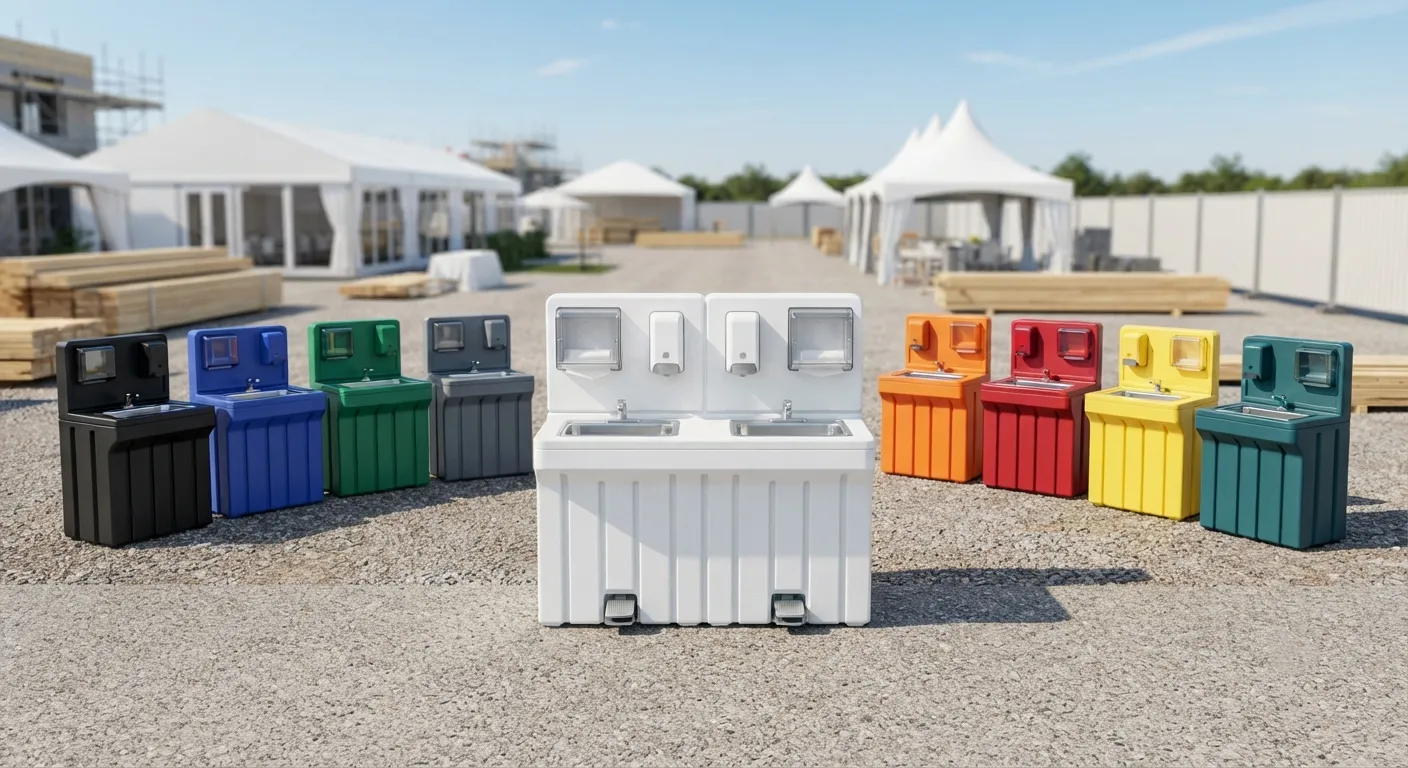
Yes. 29 CFR 1910.141(d)(2) requires soap and towels or a hand-drying device at wash stations, so they need to sit somewhere dry and reachable, not tucked behind equipment. Pair one next to each cluster of toilets rather than one station for the whole site.
Next step
Get a delivery date
Tell us the address, the dates and the headcount. We size the order and confirm the route.